Alternate History: When The Past Has More Than One Shape
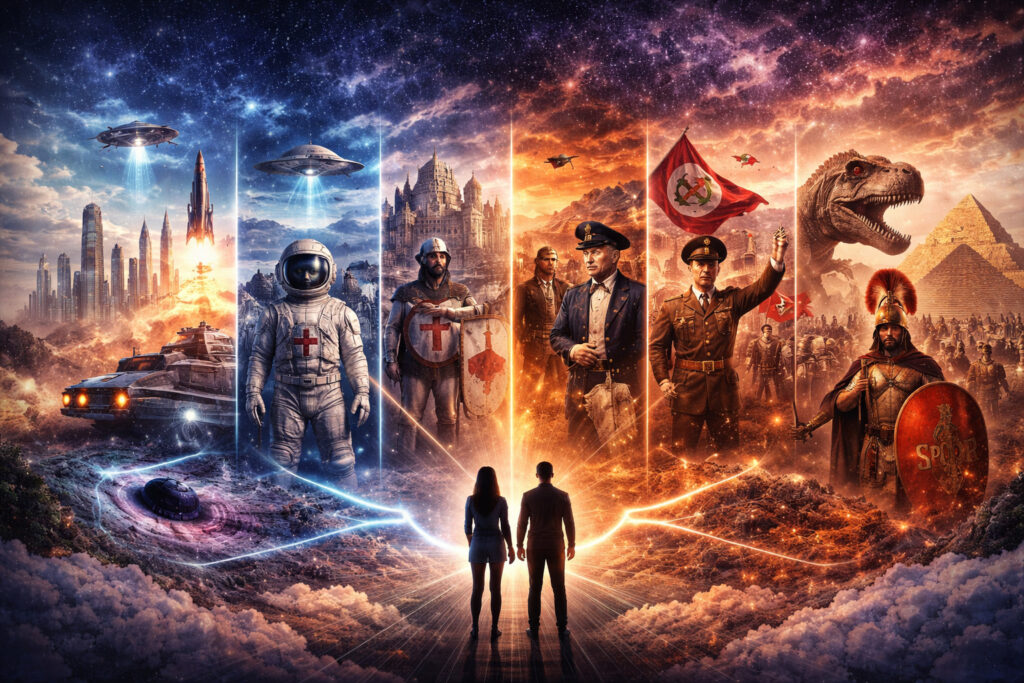
Are you familiar with the concept of alternative history? Most of us imagine history as something unchanging—a chronological sequence of events leading smoothly to the present. But what if I told you that the past is not a locked archive, but a flexible structure that changes depending on who is viewing it?
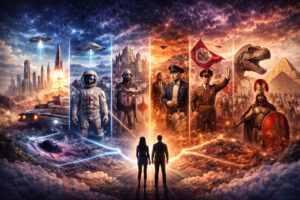
Some alternative history theorists suggest that historical reality resembles a vast network. At every major intersection, possible timelines branch out. One becomes dominant because a collective consciousness attaches to it. Others remain dormant, but never completely disappear.
Many cultural histories resonate with versions of history that differ from our official chronology. Legends of advanced civilizations, sudden disappearances, technologies that seemingly appeared “too early” in history—all these could be traces of unused timelines, surfacing in memory and myth.
If we view history as a flexible phenomenon, studying it becomes an act of exploration. Instead of simply reading the past, we can sense its ramified structure through intuition, collective memory, and the persistence of different cultures.
Frequently Asked Questions
Q: Is alternate history the same as parallel universes?
A: Not quite. Alternate history suggests hidden branches within our own timeline, rather than entirely separate universes.
Q: Can we influence the past?
A: Some theorists argue that collective consciousness can change how history is remembered or perceived.


Post Comment